

How Does Humidity Affect Hardwood Floors?
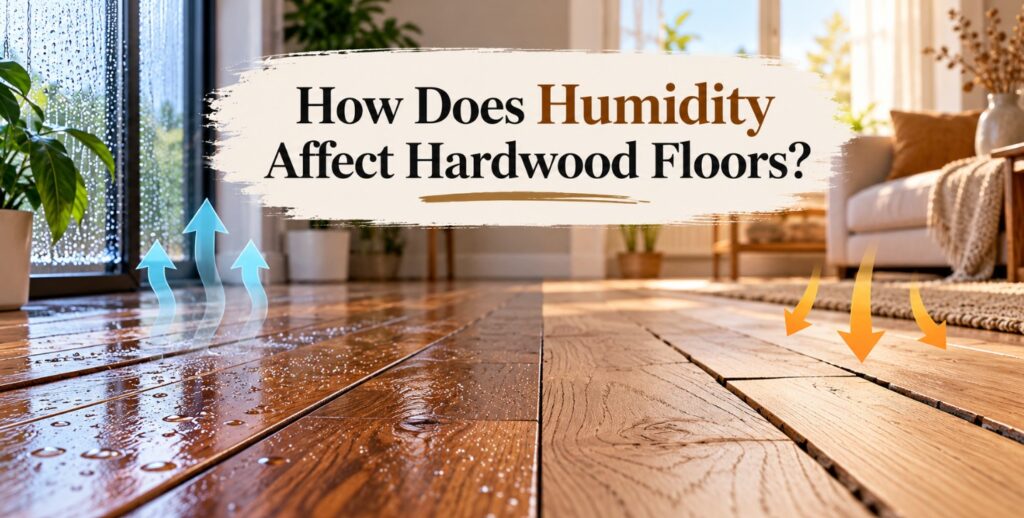
Humidity affects hardwood floors because wood naturally absorbs and releases moisture from the air. When indoor humidity rises, hardwood can expand. When humidity drops, the boards may shrink.
Small seasonal changes are normal, but large or frequent humidity swings can cause visible gaps, cupping, crowning, squeaking, or even buckling.
The best way to protect hardwood flooring is to maintain a stable indoor environment and avoid extreme moisture changes.
As a general rule, many hardwood floors perform best when indoor relative humidity stays within the range recommended by the flooring manufacturer. For many homes, a moderate and consistent humidity level is more important than achieving one exact number.
This guide explains how humidity affects hardwood flooring, what signs to watch for, and how to prevent long-term damage.
Why Does Humidity Affect Hardwood Flooring?
Hardwood is a natural, hygroscopic material.
This means it exchanges moisture with the surrounding air.
When indoor air contains more moisture, wood absorbs some of it. When the surrounding air becomes dry, the wood releases moisture.
As the moisture content changes, the boards can change dimensions.
Most movement occurs across the width of the plank rather than along its length.
That is why you may notice:
- Gaps between boards in winter
- Tight seams during humid months
- Raised edges
- Uneven surfaces
- Squeaking or movement
A well-installed hardwood floor is designed to accommodate a certain amount of seasonal expansion and contraction.
Problems usually develop when moisture conditions move outside the range the floor can safely tolerate.
What Happens to Hardwood Floors When Humidity Is Too High?
High humidity causes wood to absorb moisture.
As moisture levels increase, the boards may expand.
Minor expansion may not be noticeable, but excessive moisture can create several problems.
Cupping
Cupping occurs when the edges of a hardwood board rise higher than the center.
It often happens when the underside of the flooring contains more moisture than the top surface.
The board may develop a shallow U-shaped appearance.
Common causes include:
- High humidity below the floor
- Damp basements
- Moist crawl spaces
- Wet subfloors
- Plumbing leaks
- Poor ventilation
Mild cupping may improve after the moisture source is corrected and the floor dries.
Severe cupping may require professional repair or refinishing.
Buckling
Buckling is a more serious form of moisture-related movement.
The boards may lift away from the subfloor and form raised sections.
Buckling can result from:
- Excessive humidity
- Flooding
- Plumbing leaks
- Insufficient expansion gaps
- Wet concrete
- Adhesive failure
Buckled hardwood usually requires professional assessment.
Crowding Between Boards
As flooring expands, boards can press tightly against one another.
If there is not enough expansion space around the room perimeter, this pressure may force the floor upward.
This is one reason correct installation is essential.
Professional hardwood floor installers should leave appropriate expansion space and evaluate room conditions before installation.
Finish Problems
High moisture can also affect the protective finish.
Possible signs include:
- Cloudiness
- Peeling
- Discoloration
- Uneven sheen
- Dark staining
If moisture reaches beneath the finish, surface cleaning alone may not solve the problem.
What Happens When Indoor Humidity Is Too Low?
Dry indoor air causes hardwood to release moisture.
As the boards lose moisture, they shrink.
This is especially common during winter when heating systems reduce indoor humidity.
Gaps Between Floorboards
Small gaps between boards are one of the most common effects of low humidity.
These gaps may appear during dry months and close naturally when humidity increases again.
Seasonal gaps are usually not a cause for concern unless they become unusually wide or remain open throughout the year.
Cracking
Extreme dryness can make wood more brittle.
Some boards may develop:
- Surface cracks
- Splits
- Edge damage
- Small checks in the wood grain
Repeated drying cycles can make existing cracks worse.
Squeaking
When boards shrink, small spaces may develop between the flooring, fasteners, and subfloor.
This movement can create squeaking or creaking sounds.
Not every squeak is caused by humidity, but seasonal changes can make the problem more noticeable.
Why Do Hardwood Floors Develop Gaps in Winter?
Winter gaps usually occur because indoor heating dries the air.
As humidity drops, the hardwood loses moisture and contracts.
The spaces between boards can become more noticeable.
Small seasonal gaps are usually normal.
You should avoid filling every winter gap immediately because the flooring may expand again in spring or summer.
Rigid filler placed into a temporary gap can prevent natural expansion and create pressure between boards later.
If gaps remain open year-round, professional inspection may be appropriate.
Why Do Hardwood Floors Expand in Summer?
Summer air often contains more moisture than winter air.
When that moisture enters the home, hardwood absorbs some of it and expands.
This can make winter gaps disappear.
However, excessive summer humidity may create:
- Tight seams
- Raised board edges
- Cupping
- Buckling
- Door clearance problems
Air conditioning and dehumidification can help maintain more consistent conditions.
What Is the Best Humidity Level for Hardwood Floors?
There is no single humidity number that applies to every hardwood product or climate.
Flooring manufacturers often provide a recommended indoor relative humidity range for their specific product.
Many homes aim for a moderate indoor range, often somewhere around 35% to 55% relative humidity, but you should always follow the flooring manufacturer’s instructions.
The most important factor is consistency.
A floor that repeatedly moves between extremely dry and extremely humid conditions may experience more stress than one kept within a relatively stable range.
Use a digital hygrometer to monitor indoor humidity.
These small devices can help you identify seasonal changes before the flooring develops visible problems.
How Does Humidity Affect Engineered Hardwood?
Engineered hardwood is generally more dimensionally stable than solid hardwood.
It is made with a real wood surface layer over multiple core layers arranged in different directions.
This construction helps reduce expansion and contraction.
However, engineered hardwood is not immune to humidity.
Excess moisture can still cause:
- Cupping
- Swelling
- Edge damage
- Delamination
- Adhesive failure
- Gaps
- Warping
Extremely dry conditions can also cause shrinkage.
The wear layer may be thin, so aggressive sanding is not always an option if moisture damage occurs.
How Does Humidity Affect Solid Hardwood?
Solid hardwood is more responsive to moisture because each plank is made from one continuous piece of wood.
Seasonal movement is normal.
Wider planks can sometimes show more visible expansion and contraction than narrower boards.
Proper acclimation, subfloor preparation, expansion spacing, and humidity control are especially important with solid hardwood.
Why Acclimation Matters Before Installation
Hardwood should usually be allowed to adjust to the conditions of the installation area before it is installed.
This process is called acclimation.
The goal is to allow the flooring to reach an appropriate moisture balance with the home.
Installing boards that are too wet or too dry can lead to movement after installation.
Potential problems include:
- Gaps
- Buckling
- Cupping
- Board separation
- Squeaking
A professional installer may use moisture meters to compare the moisture content of the flooring and subfloor.
The correct acclimation process depends on the flooring product, wood species, room conditions, and manufacturer instructions.
Why Subfloor Moisture Matters
Indoor air is not the only source of moisture.
The subfloor can also affect hardwood.
A wet wooden or concrete subfloor may release moisture into the flooring from below.
This can cause:
- Cupping
- Adhesive failure
- Mold
- Discoloration
- Buckling
Moisture testing should be completed before installation, especially over concrete slabs, basements, and ground-level floors.
Appropriate moisture barriers or vapor-control systems may also be required.
How to Protect Hardwood Floors From High Humidity
Use a Dehumidifier
A dehumidifier can reduce excess moisture during humid weather.
This can be especially helpful in:
- Basements
- Lower levels
- Coastal areas
- Humid climates
Use Air Conditioning
Air conditioning helps remove moisture from indoor air while cooling the home.
Consistent use during humid months can help reduce major fluctuations.
Improve Ventilation
Bathrooms, kitchens, basements, and crawl spaces should have proper ventilation.
Exhaust fans and airflow can help reduce moisture buildup.
Fix Water Leaks Quickly
Even perfect indoor humidity cannot protect hardwood from an active leak.
Repair:
- Plumbing leaks
- Roof leaks
- Window leaks
- Appliance leaks
as soon as possible.
Avoid Wet Mopping
Use a lightly damp microfiber mop rather than a soaking-wet mop.
Standing water can enter the seams and increase moisture inside the flooring.
How to Protect Hardwood Floors From Low Humidity
Use a Humidifier
A humidifier can add moisture to dry indoor air.
Whole-home humidifiers may provide more consistent control than small portable units.
Monitor Humidity
Do not rely only on how the room feels.
A digital hygrometer can show whether the indoor air has become excessively dry.
Avoid Extreme Heating
Very high indoor temperatures can further dry the air.
Maintain a comfortable and stable temperature.
Do Not Overcorrect
Adding too much humidity can create the opposite problem.
The goal is balance, not maximum moisture.
Can Humidity Damage Hardwood Permanently?
Yes.
Minor seasonal movement may reverse when conditions return to normal.
However, prolonged exposure to excessive moisture or extreme dryness can create permanent damage.
Possible long-term problems include:
- Severe cupping
- Buckling
- Cracked boards
- Delamination
- Mold
- Finish failure
- Permanent gaps
- Subfloor damage
Early action can prevent small humidity-related problems from becoming expensive repairs.
Can Cupped Hardwood Flatten Again?
Mild cupping may improve after the moisture source is corrected.
The floor should be allowed to dry gradually.
Do not sand cupped boards while they are still wet.
If the floor is sanded too early, the boards may later develop crowning as the underside dries.
Professional moisture testing can confirm when the floor has stabilized.
Should You Fill Humidity-Related Gaps?
Not always.
Small gaps that appear only during dry months should usually be monitored rather than filled.
They may close naturally when indoor humidity increases.
Permanent gaps may require repair if they:
- Remain year-round
- Continue getting wider
- Collect excessive debris
- Make boards unstable
Before filling gaps, determine whether humidity is still causing movement.
Common Humidity Mistakes Homeowners Make
Ignoring Indoor Humidity
Many homeowners only think about moisture after the floor develops visible damage.
Regular monitoring can help prevent problems.
Filling Seasonal Gaps
Winter gaps may close naturally. Filling them with rigid materials can interfere with later expansion.
Sanding Cupped Floors Too Early
Sanding before moisture levels stabilize may create additional unevenness.
Using Steam Mops
Steam introduces heat and moisture into the floor.
This can worsen swelling and finish damage.
Running a Humidifier Too High
More humidity is not always better.
Excess moisture can cause expansion and cupping.
Ignoring Basement or Crawl-Space Moisture
Moisture below the floor can affect hardwood even when the living space feels comfortable.
Signs Humidity Is Affecting Your Hardwood Floor
Watch for:
- Seasonal gaps
- Cupped board edges
- Raised floor sections
- Squeaking
- Cracked planks
- Tight seams
- Dark stains
- Peeling finish
- Loose boards
- Uneven surfaces
If these problems appear suddenly, investigate moisture conditions immediately.
When Should You Call a Professional?
Contact a flooring professional when:
- Cupping does not improve
- Boards are buckling
- Gaps remain year-round
- The floor is lifting
- There is visible water damage
- Moisture readings remain high
- The subfloor may be wet
- Boards have cracked
- Mold or odor is present
- You are planning a new installation
A professional can determine whether the problem is related to indoor humidity, a leak, subfloor moisture, or installation conditions.
Why Choose ElmWood Flooring?
ElmWood Flooring provides professional hardwood floor installation, refinishing, repair, and restoration services.
Humidity-related problems can be difficult to diagnose because the visible damage does not always reveal where the moisture is coming from.
ElmWood Flooring can evaluate:
- Floor moisture levels
- Subfloor conditions
- Indoor humidity
- Cupping or buckling
- Seasonal gaps
- Existing expansion space
- Installation methods
- Finish condition
If the damage is minor, the floor may only need time to stabilize or targeted repair.
More serious cases may require board replacement, subfloor correction, sanding, or refinishing.
ElmWood Flooring can also help homeowners select hardwood or engineered flooring that fits the conditions of the property and install it with appropriate moisture testing and preparation.
The goal is not just to improve the appearance of the floor, but to address the cause of the movement so the problem is less likely to return.
Frequently Asked Questions
Does humidity make hardwood floors expand?
Yes. High humidity can cause hardwood to absorb moisture and expand.
Does low humidity cause gaps in hardwood floors?
Yes. Dry air can cause hardwood to shrink, creating small spaces between boards.
What humidity is best for hardwood floors?
Many hardwood products perform well in moderate indoor humidity, often around 35% to 55%, but always follow the flooring manufacturer’s recommended range.
Will hardwood floor gaps close when humidity rises?
Small seasonal gaps often close or become less noticeable as humidity increases.
Can high humidity cause hardwood floors to buckle?
Yes. Excessive moisture and insufficient expansion space can contribute to buckling.
Can a dehumidifier help cupped hardwood floors?
A dehumidifier may help reduce excessive moisture, but active leaks and wet subfloors must also be corrected.
Should I use a humidifier in winter?
A properly controlled humidifier can help reduce excessive dryness and seasonal gaps. Monitor indoor humidity so you do not add too much moisture.
Does engineered hardwood handle humidity better?
Engineered hardwood is generally more dimensionally stable than solid hardwood, but it can still be damaged by extreme humidity or water exposure.
Can humidity damage the hardwood finish?
Yes. Excess moisture may lead to cloudiness, peeling, discoloration, or finish separation.
When should humidity-related floor damage be repaired?
Allow moisture conditions to stabilize first unless there is an urgent safety issue. A professional should inspect severe cupping, buckling, cracking, or persistent gaps.
Final Thoughts
Humidity has a direct effect on hardwood flooring because wood naturally exchanges moisture with the surrounding air.
High humidity can cause expansion, cupping, and buckling, while low humidity can cause shrinkage, gaps, cracks, and squeaking.
Some seasonal movement is normal.
The key to protecting hardwood is maintaining consistent indoor humidity, fixing water problems quickly, avoiding excessive moisture during cleaning, and ensuring proper installation.
Using a hygrometer, humidifier, dehumidifier, air conditioning, and good ventilation can help create a stable environment.
For persistent gaps, cupping, buckling, moisture damage, installation, or professional restoration, ElmWood Flooring can inspect your floor and recommend a solution designed to protect both its appearance and long-term performance.

