

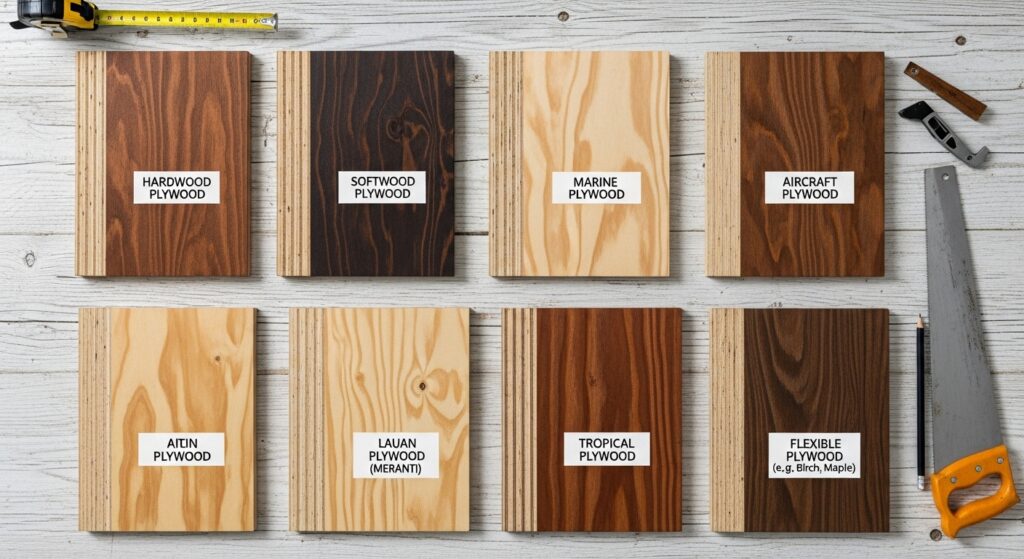
When starting a flooring project most people think only about the floor, or what type of flooring that are wanting to have, while this is key the other thing to consider is plywood and how to have it properly installed by a professional and to make sure you have the right size and kind of plywood needed for your flooring, many customers we come across do not give this any thought when calling a flooring contractor. If you’ve ever stood in a hardware store staring at stacks of plywood sheets, you’re not alone. Plywood looks simple at first glance, but once you start comparing plywood sizes, plywood thickness, grades, and applications, it can quickly get confusing. plywood is the starting point to have flooring last a long time vs. only a few years if not properly installed or having the right size put in.
This guide explains what is plywood, the different plywood types, how plywood sheet sizes work, and how to choose the right sheet of plywood for your project—whether it’s furniture, flooring, cabinetry, or construction. If you need more help or have many questions, you can reach out to ElmWood Flooring for help in your next home project, we are here to help you get your home done the right way the first time by our highly skilled team members.
By the end, you’ll clearly understand:
- How big is a sheet of plywood
- Standard plywood measurements
- Plywood thickness chart explained in simple terms
- Differences between plywood grades and types
What Is Plywood?
Before diving into plywood types, let’s answer the basics.
What is plywood?
Plywood is an engineered wood product made by bonding multiple thin layers of wood veneer together. These layers—called plies—are stacked with alternating grain directions, which gives plywood its strength and stability.
This layered structure is why ply sheets are stronger and more dimensionally stable than solid wood boards of the same thickness.
Why Plywood Sheets Are Used So Widely
Plywood sheets are popular because they:
- Resist warping and cracking
- Come in standardized sizes
- Are available in multiple thicknesses
- Work for both structural and decorative projects
From construction sites to interior furniture, plywood sheets are one of the most versatile materials available.
Standard Plywood Sheet Sizes Explained
One of the most common questions people ask is: how big is a sheet of plywood?
Standard Sheet of Plywood Size
In most countries, the standard plywood dimensions are:
- 4 feet × 8 feet (1220 mm × 2440 mm)
This is the most common sheet of plywood size used in construction, flooring underlayment, wall sheathing, and cabinetry.
So when someone asks how big is a sheet of plywood, the short answer is:
👉 4×8 feet
However, this is not the only size available.
Other Common Plywood Sheet Sizes
Depending on the application, plywood sheet sizes may also include:
- 3×6 feet
- 4×6 feet
- 5×5 feet (commonly used for Baltic birch)
These variations are often chosen for furniture, modular work, or where waste reduction matters.
Standard Plywood Measurements (Quick Overview)
Here’s a simple way to understand standard plywood measurements:
- Length: usually 8 feet
- Width: usually 4 feet
- Thickness: varies by application
Even when the plywood sizes change, thickness remains the most important factor for strength and performance.
Plywood Thickness Explained (In Simple Terms)
Plywood thickness determines how strong and rigid the sheet will be. Thicker plywood can span longer distances and handle more weight.
Common Plywood Thickness Options
Typical thickness of ply board includes:
- 6 mm (1/4 inch)
- 9 mm (3/8 inch)
- 12 mm (1/2 inch)
- 15 mm (5/8 inch)
- 18 mm (3/4 inch)
These options form the basis of most plywood thickness chart references.
Plywood Thickness Chart (Practical Guide)
Here’s how the plywood thickness chart is commonly used in real projects:
- 6–9 mm → paneling, drawer bottoms, backing
- 12 mm → cabinets, furniture sides
- 15 mm → subflooring, shelving
- 18 mm → flooring, countertops, heavy-duty furniture
Choosing the right plywood thickness prevents sagging, cracking, and structural failure.
Understanding Plywood Types
Not all plywood is the same. There are many plywood types, each designed for specific conditions and uses.
Let’s break them down.
Softwood Plywood
Softwood plywood is typically made from pine, fir, or spruce.
Common uses:
- Wall sheathing
- Roof decking
- Subfloors
This is one of the most widely used plywood types in construction.
Hardwood Plywood
Hardwood plywood uses veneers like oak, birch, maple, or walnut.
Common uses:
- Cabinets
- Furniture
- Interior finishes
Hardwood plywood sheets are chosen for appearance as well as strength.
Marine Plywood
Marine plywood is designed for moisture-heavy environments.
Features:
- Waterproof adhesive
- High-quality core
- Minimal voids
It’s commonly used in:
- Boats
- Bathrooms
- Kitchens
Exterior Grade Plywood
When comparing plywood grades exterior, exterior plywood is bonded with water-resistant glue.
Suitable for:
- Outdoor structures
- Exterior walls
- Roofing
This type handles humidity better than interior plywood.
Interior Grade Plywood
Interior plywood is designed for dry spaces only.
Common uses:
- Furniture
- Cabinets
- Decorative panels
Using interior plywood outdoors will lead to delamination.
Plywood Grades Explained
Another important factor is grading.
Common plywood grades:
- A (smooth, sanded, best appearance)
- B (minor defects)
- C (visible knots and repairs)
- D (structural use, rough appearance)
When choosing plywood grades exterior, lower grades are often acceptable because appearance matters less than strength.
Plywood Sheet vs Solid Wood Board
Many people ask whether a plywood sheet is better than solid wood.
Advantages of plywood:
- More stable
- Less warping
- Larger sheet size
- Consistent thickness
That’s why ply sheets are preferred for large surfaces.
Sheet of Plywood Size vs Project Type
Choosing the right sheet of plywood depends on what you’re building.
Furniture projects:
- Smaller plywood sheet sizes
- Thinner plywood thickness
Construction projects:
- Standard plywood dimensions
- Thicker ply boards
Matching the sheet of plywood size to your project reduces waste and cost.
How to Choose the Right Plywood for Your Project
When selecting from different plywood types, ask yourself:
- Will it be exposed to moisture?
- Does appearance matter?
- How much weight will it carry?
- What plywood thickness is required?
Answering these questions narrows down the right plywood sheet quickly.
Common Mistakes When Buying Plywood Sheets
Many beginners make these mistakes:
- Choosing wrong plywood thickness
- Ignoring plywood grades
- Using interior plywood outdoors
- Assuming all plywood sizes are the same
Understanding standard plywood measurements avoids these problems.
Why Plywood Sizes and Thickness Matter Long-Term
Incorrect plywood thickness leads to:
- Sagging shelves
- Weak floors
- Structural failure
Incorrect plywood sizes lead to:
- Excess waste
- Extra cuts
- Higher labor time
That’s why professionals rely heavily on plywood thickness charts and standard measurements.
Frequently Asked Questions (FAQs)
What is plywood made of?
Plywood is made by bonding multiple thin wood veneers together with adhesive, with grains alternating for strength.
How big is a sheet of plywood?
The standard sheet of plywood size is 4 feet by 8 feet.
What are standard plywood dimensions?
Standard plywood dimensions are usually 4×8 feet, with varying thicknesses.
What are common plywood thickness options?
Common plywood thickness ranges from 6 mm to 18 mm.
Which plywood thickness is best for flooring?
Typically, 15 mm or 18 mm plywood is used for flooring applications.
What are plywood grades exterior?
Exterior plywood grades are designed to resist moisture and are suitable for outdoor use.
Are all plywood sheets the same size?
No, plywood sheet sizes can vary depending on application and manufacturer.
What plywood types are best for furniture?
Hardwood plywood is commonly used for furniture due to its strength and appearance.
What is the thickness of ply board used for cabinets?
Cabinets commonly use 12 mm or 15 mm plywood thickness.
Why use plywood instead of solid wood?
thicker Plywood is more stable, less prone to warping, and available in large sheet sizes.
Final Thoughts
Understanding plywood sheets, plywood sizes, plywood thickness, and plywood types makes project planning easier and more cost-effective. Whether you’re working with a single sheet of plywood or multiple ply sheets, choosing the right thickness, size, and grade ensures durability and long-term performance. Please reach out to ElmWood Flooring if you have any questions or concerns about plywood or need more information or pricing on any and materials or labor costs. Our company is always here to help walk you through the process of flooring or remodeling your home or business from start to finish.

